GLOW (TB500 10mg + BPC 157 10mg + GHKCU 50mg
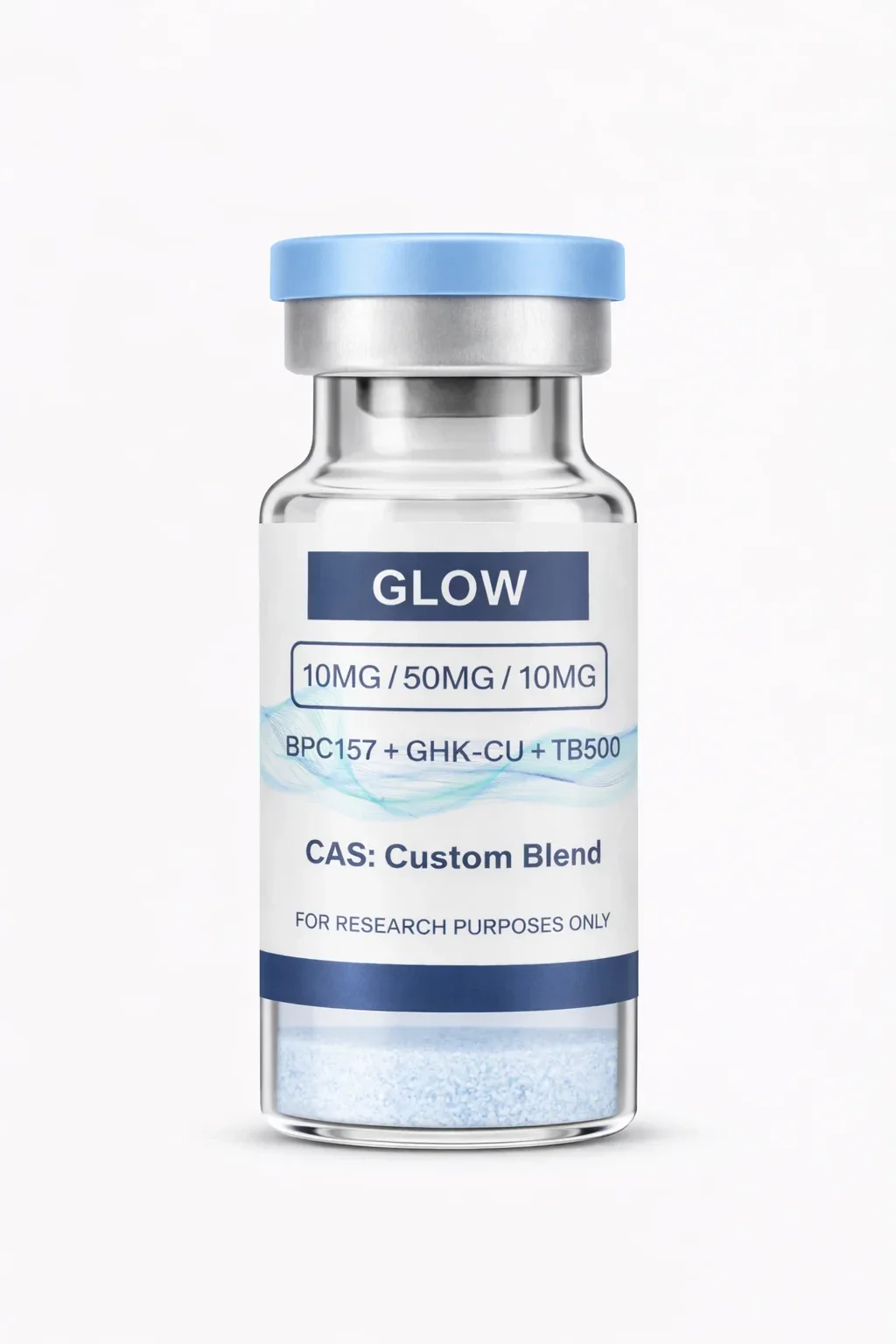
The Glow Stack Peptide (or Glow Blend) is a highly trending combination of three regenerative biohacking compounds—GHK-Cu, BPC-157, and TB-500—designed to synergistically stimulate collagen, accelerate tissue repair, and reduce inflammation from the inside out.
Key Components of the StackThe stack earns its name by building upon the famous "Wolverine Stack" (BPC-157 + TB-500) used for physical recovery and adding a cosmetic, collagen-boosting component:GHK-Cu (Copper Peptide): Promotes systemic collagen and elastin production, which thickens skin, improves hair density, and addresses fine lines and wrinkles.BPC-157 (Body Protection Compound): Calms inflammation, repairs deep soft tissue, and improves gut barrier health.TB-500 (Thymosin Beta-4 Fragment): Drives rapid cell migration, accelerates wound healing, and speeds up structural tissue regeneration.Optional Add-ons: Many health clinics pair this stack with NAD+ precursors to improve mitochondrial function and overall baseline energy.Primary Purported BenefitsInside-Out Skincare: Boosts baseline skin elasticity, hydration, and natural radiance far beyond surface topical serums.Hair and Nail Vitality: Users frequently document thicker hair growth and follicle stimulation.Rapid Recovery: Drastically cuts down downtime after intense workouts, physical injuries, or aggressive aesthetic skin procedures like microneedling.Administration, Cycles, and Safety CautionsHow it is Used: The stack is most commonly sold as a single lyophilized (freeze-dried) powder vial. It requires reconstitution with bacteriostatic water and is administered via small subcutaneous injections into the abdomen. Some clinics offer topical creams or serums, though they lack the systemic absorption of injections.The Cycle: Standard protocols recommend a continuous cycle of 6 to 12 weeks, followed by a strict 2 to 4-week break to prevent your receptors from becoming desensitized.The Caveats: Medical experts and articles from The BMJ note that while these compounds display highly promising tissue-healing properties in cellular and animal research models, robust, long-term human clinical trials for aesthetic use remain limited. Common mild side effects include local stinging or redness at the injection site.